Beginner yoga poses can feel surprisingly approachable when the first step is simple, slow, and realistic. You do not need a studio membership to start. You do not need perfect flexibility either. What matters most is learning how each movement supports balance, breathing, and body awareness. A calm home setup helps remove pressure. Clear instructions make the process less intimidating. Small wins build trust quickly. Your body starts recognizing patterns. Your mind settles into the rhythm. With the right resource, yoga for new learners becomes a steady wellness habit instead of another overwhelming goal.
Starting small protects your confidence. It also protects your body. Many beginners quit because they try too much too soon. A slower approach creates safety and consistency. Mountain pose teaches posture. Child’s pose teaches release. Cat-cow teaches spinal movement. These simple shapes introduce the language of yoga. They also help you notice tension. You learn where your shoulders tighten. You feel how breathing changes movement. That awareness makes foundational yoga practice feel useful from the very first session.
Flexibility is not the price of entry. It is one possible result. Confidence matters more at the beginning. When you understand what a pose is meant to do, you stop forcing your body into shapes. You begin adjusting with care. A bent knee becomes a smart choice. A shorter stance becomes support. A slower pace becomes strength. This mindset makes practice feel personal. It also reduces comparison. You are not copying a performance. You are building a relationship with your body through mind and body wellness.
Energy improves when movement becomes repeatable. Beginner yoga poses support that rhythm because they do not demand complicated planning. A few minutes of standing stretches can wake up stiff muscles. Gentle forward folds can release the back. Low lunges can open the hips after sitting. Downward dog can refresh the whole body. These movements work best when practiced consistently. They help you reset without needing equipment. They also create a bridge between stillness and activity. Over time, daily yoga routines can become a natural part of your morning or evening.
Breathing changes the way yoga feels. It slows the nervous system. It helps you move with intention. It gives your body a signal that you are not rushing. Inhale before lengthening. Exhale while softening. Pause when the body asks for space. These simple cues turn poses into practice. They also make beginner sessions feel calmer. Breath creates focus when the mind wanders. It brings attention back to the present. That is why breathing exercises for beginners matter as much as the poses themselves.
Beginner yoga poses become easier to keep when they fit into real life. Ten minutes can be enough. A short warm-up can prepare the spine. Two standing poses can build strength. A gentle seated stretch can close the practice. This structure removes decision fatigue. It also helps busy people stay consistent. You do not need a perfect hour. You need a plan that respects your day. When practice feels manageable, motivation becomes less fragile. A small routine repeated often can support better posture, steadier mood, and more comfortable movement.
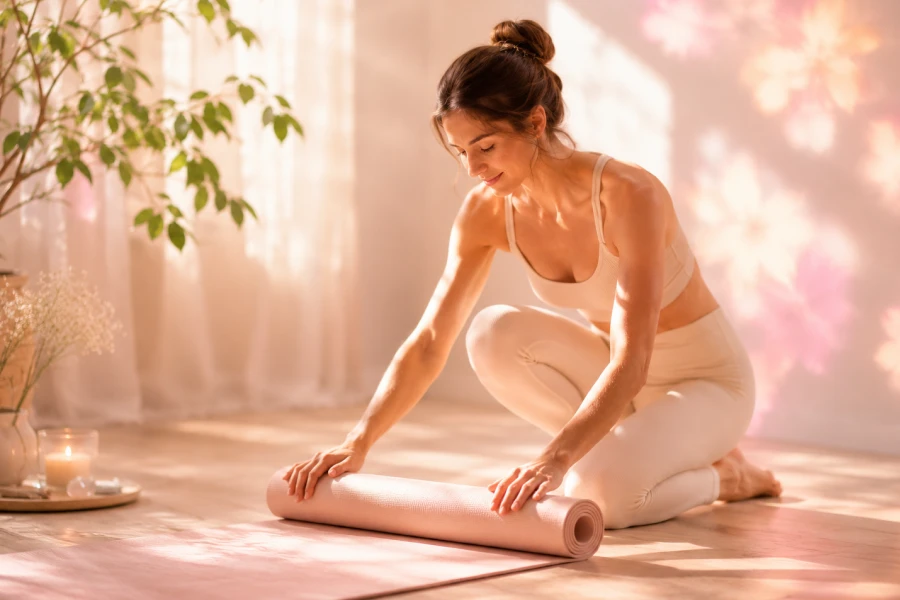
Your space does not need to look polished. It needs to feel available. A mat beside the bed can help. A quiet corner can work. A towel on the floor is enough for many sessions. Soft lighting can make practice feel inviting. A phone timer can keep things simple. The goal is fewer barriers. When the space is ready, the habit starts faster. You spend less time deciding. You spend more time moving. This practical setup makes yoga feel like part of home life, not a separate wellness project.
Beginner yoga poses can improve faster when you track what feels different. Progress is not only about deeper stretches. It can mean better balance. It can mean calmer breathing. It can mean less tension after work. A simple journal helps you notice these changes. AI prompts can support reflection. They can suggest beginner-friendly sequences. They can help you adjust a routine around energy, soreness, or time. Used carefully, personalized yoga sequences make practice feel more responsive.
The first month sets the tone. It teaches your body that practice is safe. It teaches your mind that consistency can be gentle. You may miss a day. That does not ruin progress. You may repeat the same pose many times. That is how learning works. A thirty-day plan can make the path clearer. It gives each week a purpose. It also removes pressure to improvise. When beginner yoga poses become familiar, they stop feeling like instructions. They start feeling like tools you can return to whenever your body needs support.




Leave a comment
You must be logged in to post a comment.