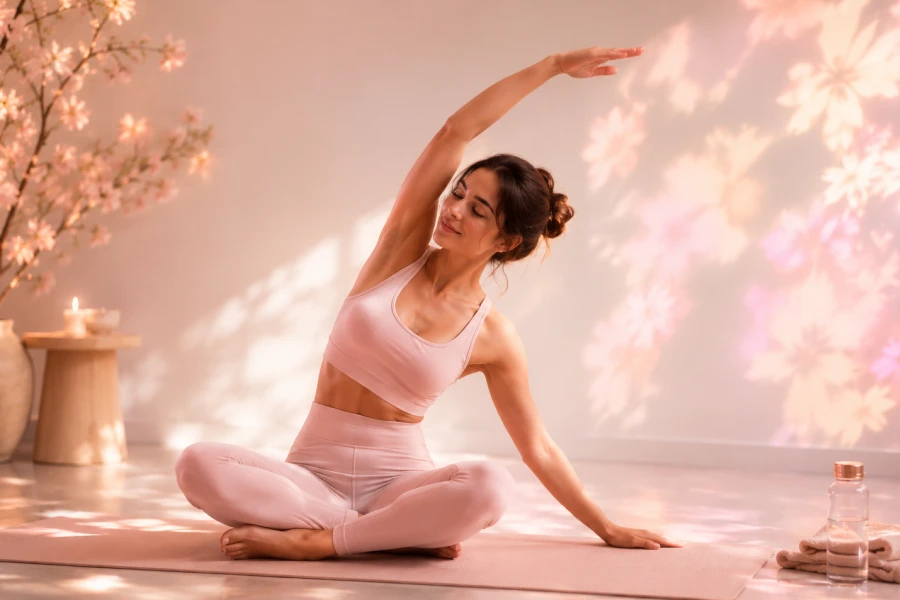
Daily yoga practice for beginners becomes easier when the goal is consistency, not perfection. A home practice can feel calm, private, and flexible. You choose the time. You choose the pace. You choose when to pause. That freedom matters for people who feel intimidated by group classes. The first step is not a dramatic lifestyle change. It is a small routine that feels possible tomorrow. With clear pose instructions, breathing support, and beginner-friendly yoga lessons, your practice can grow naturally from a few quiet minutes.
Structure removes the hardest question. It tells you what to do next. Beginners often lose momentum because every session feels like a new decision. A simple format changes that. Warm up the body. Move through two or three foundational poses. Practice breathing. Close with rest. This rhythm is easy to repeat. It also gives the body familiarity. Familiarity builds confidence. Confidence supports consistency. Over time, yoga habit building becomes less about discipline and more about returning to a routine that already feels supportive.
Ten minutes can change the way practice feels. It is short enough for busy mornings. It is gentle enough for low-energy evenings. It is long enough to create a real reset. A beginner flow might include standing posture, slow forward folding, cat-cow movement, a low lunge, and quiet breathing. That sequence does not need to be fancy. It needs to be repeatable. Repetition creates learning. Learning creates ease. Ease creates motivation. When the session is small, you are less likely to skip it completely.
Daily yoga practice for beginners teaches you to listen before pushing. That lesson matters beyond the mat. You begin noticing tight hips after long sitting. You notice shallow breathing during stress. You notice how posture affects mood. These signals help you choose smarter movement. Instead of forcing progress, you respond to the day you actually have. Some sessions build strength. Others restore energy. Both count. This flexible awareness makes yoga more sustainable. It also supports at-home yoga practice that respects real bodies.
Breathing keeps a daily routine grounded. It also makes short practices feel complete. You can begin with three slow breaths. You can return to breath between poses. You can end by noticing the difference between the first inhale and the last. This simple anchor creates continuity. It helps the mind settle faster. It makes each session feel connected to the next. Even when movement is brief, breath gives the practice depth. That is especially useful when time is limited, energy is uneven, or motivation feels thin.
Daily yoga practice for beginners should adapt during busy weeks. A rigid plan often breaks. A flexible plan bends and survives. On demanding days, choose three poses. On calmer days, extend the flow. When your body feels sore, slow down. When your mind feels scattered, focus on breath. This approach prevents all-or-nothing thinking. It also makes yoga easier to maintain over months. A consistent practice does not mean every session looks identical. It means you keep returning with attention, patience, and honest expectations.
Comparison can steal the value from a beginner practice. Someone else may fold deeper. Someone else may balance longer. That does not make your practice smaller. Your progress is measured by awareness, steadiness, and consistency. Maybe your shoulders relax faster. Maybe your breathing slows sooner. Maybe you recover from stress with less effort. These changes matter. They are signs of integration. When you stop comparing, yoga becomes more personal. It becomes a tool for your life, not a test of your flexibility.
Daily yoga practice for beginners can benefit from thoughtful prompts. After practice, ask what felt easier today. Ask where tension appeared. Ask what kind of session would support tomorrow. AI can help turn those answers into practical next steps. It can suggest a short flow for tight shoulders. It can create a calming evening sequence. It can help organize a thirty-day plan. The value is personalization. With personalized yoga support, beginners can learn without feeling lost.
The best beginner routine leaves room for growth. Your first week may feel awkward. Your second week may feel steadier. Your third week may reveal favorite poses. Your fourth week may bring a stronger sense of rhythm. Progress arrives quietly. It shows up as better posture, calmer breathing, and more trust in your body. That is why daily yoga practice for beginners deserves patience. It is not a race toward advanced poses. It is a steady path toward feeling more connected, capable, and at home in your own movement.



Leave a comment
You must be logged in to post a comment.